Viktor Griffin · 2 September 2026
Marine biologists from the Quartz Bay Research Institute have launched a multi-year study to assess sediment recovery in the bay following decades of industrial activity. The project focuses on measuring changes in sediment composition, heavy metal levels, and benthic organism populations across 12 monitoring sites.
Sampling and Analysis Techniques
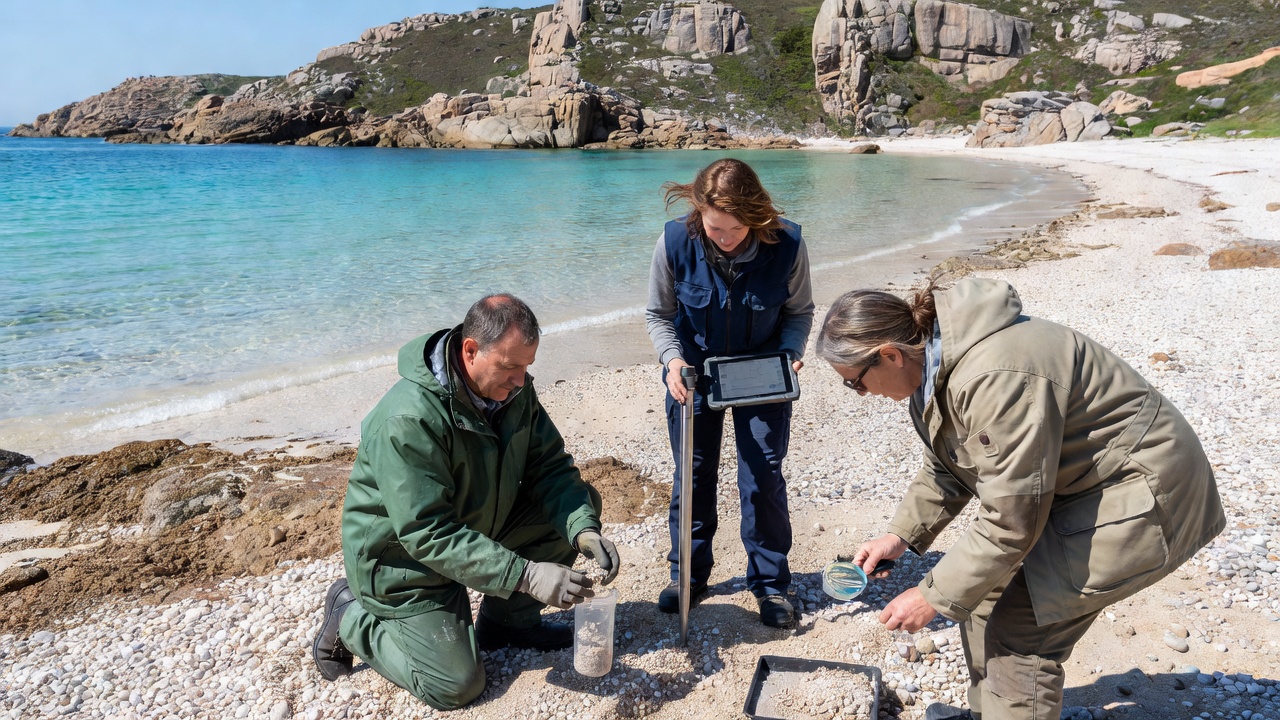
Researchers collect core samples quarterly using specialized equipment that preserves sediment layers for laboratory analysis. Tests measure concentrations of lead, mercury, and polycyclic aromatic hydrocarbons. Early results show a 15 percent decline in average lead levels compared to 2018 baselines. Benthic diversity has increased modestly, with three polychaete species returning to previously barren zones. Data loggers deployed at each site record temperature, salinity, and dissolved oxygen every 30 minutes to correlate environmental conditions with sediment health.
Team members also conduct underwater visual surveys using remotely operated vehicles to map sediment texture and identify emerging seagrass patches. These observations help validate laboratory findings and guide targeted restoration efforts. The study incorporates historical data from the 1990s to establish long-term trends and account for natural variability in bay currents.
Observed Trends and Next Steps
Recovery rates vary by location, with northern sites showing faster improvement due to stronger tidal flushing. Southern areas near former industrial outfalls continue to exhibit elevated contaminant levels, prompting additional sampling transects. Biologists note that burrowing organisms are gradually mixing cleaner surface sediments with deeper contaminated layers, a process expected to accelerate natural attenuation.
Project leads plan to publish annual reports and share findings with local regulators to inform dredging permits and habitat restoration priorities. Community volunteers assist with shoreline litter removal that could otherwise reintroduce pollutants. The initiative aims to provide a replicable model for other urban bays facing similar legacy contamination challenges while supporting sustainable fisheries and recreational use in Quartz Bay.